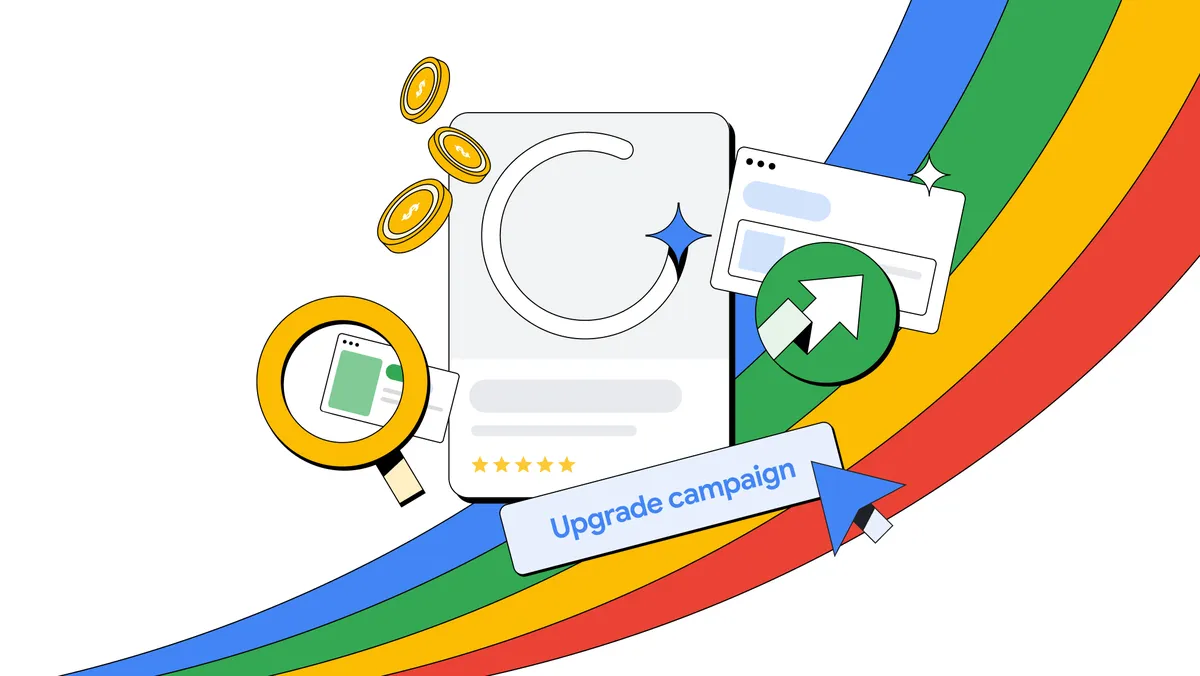
Google’s new AI Max for Search appears to absorb much of what Dynamic Search Ads once offered, while promising broader reach, better automation, and more creative flexibility. The strategic shift makes sense on paper, but for advertisers who remember DSA well, it also raises an obvious question: is this real progress, or just a more advanced version of an old gamble?

Dynamic Search Ads Were Built for Scale

When Google launched Dynamic Search Ads in 2011, the format solved, or at least try to solve a real problem. Large websites, ecommerce stores, and businesses with constantly changing inventories could not realistically build keyword coverage for every product, category, or query variant. DSA offered a shortcut by using Google’s own crawl of the advertiser’s site to identify relevant searches and route traffic automatically.

How practical the DSA itself was is a different story, though.

In practical terms, Dynamic Search Ads were “keywordless”, crawl-based search campaigns that auto-generated headlines and selected landing pages based on site content and user intent. Advertisers could target all pages, specific page feeds, or URL-based rules, while Google handled the matching. That made DSA attractive for businesses with broad catalogs and for teams that wanted faster deployment with less manual build work.

Why DSA Always Was a Mixed Bag

The appeal of DSA was never hard to understand. It could surface long-tail search demand that advertisers would never think to target manually, and it often worked as an additional keyword discovery layer. On well-structured websites with clean information architecture, strong titles, and tightly themed landing pages, DSA could deliver meaningful incremental reach with relatively little setup.

The problem was that the format was only as good as the website feeding it. If the site structure was messy, the titles vague, or the content too broad, Google’s automated matching could become erratic. That meant irrelevant search terms, poor landing page choices, and wasted spend. For brand-sensitive advertisers or performance-focused teams, that unpredictability made DSA difficult to trust as a primary campaign type.

That tension defined the format for years. Many PPC practitioners used DSA, but often as a supporting tool rather than a main engine of growth. It was useful for filling gaps, testing query coverage, and generating ideas. It was much less comfortable as the central pillar of a tightly controlled search strategy.

AI Max Looks Like DSA Evolved

That is why Google’s move toward AI Max feels less like a clean break and more like an evolution of the same system. The keywordless logic remains. Google still leans on site content, relevance signals, and automated decision-making to determine when ads should appear and where users should land. What changes is the level of AI layered on top of that foundation.

Instead of simply matching pages to queries and generating a headline, AI Max appears designed to expand query matching more aggressively, automate creative more deeply, and give advertisers additional controls around how those systems operate. In theory, that should make the format more flexible and better aligned with the broader direction of Google Ads, where machine learning is increasingly central to targeting, bidding, and messaging.

This is also consistent with Google’s wider product philosophy. The company has spent years moving advertisers away from manual structures and toward automated systems that claim to interpret intent more effectively than human-built keyword lists alone. AI Max fits that trajectory exactly. It is not merely replacing a legacy feature. It is taking the original DSA premise and pushing it further into Google’s AI-first advertising stack.

The Control Problem Has Not Disappeared

The issue is that more intelligence does not automatically mean more reliability. Automation can improve scale, speed, and pattern recognition, but it can also amplify bad inputs. If DSA was heavily dependent on site quality, AI Max is unlikely to escape that dependency. In fact, a more expansive AI-driven system may make the consequences of weak website structure even more severe.

That is where advertiser skepticism remains justified. In many accounts, especially across a wide range of budgets and business types, Dynamic Search Ads had a habit of spending quickly without producing equally strong returns. In fact, it has more often felt like a shotgun approach rather than a sniper’s aim. And precision was everything when it came to paid advertising. 

In the past, I have worked with dozens and dozens of companies with Google Ads accounts’ budgets ranging from a few thousand dollars per month to six figures buidgets. DSA produced mixed outcomes, at best. More often than not, it was merely an efficient way to burn money.

In theory, DSA could reveal useful long-tail queries that had not been identified during initial keyword research. In practice, though, any skilled keyword researcher would already uncover most of what mattered. That often made DSA a questionable investment, especially when the extra spend produced only a small margin of additional keyword coverage.

Where AI Max May Actually Be Useful

That does not mean AI Max should be dismissed. It may prove valuable in the same places where DSA historically made the most sense: large sites, broad inventories, changing product sets, or campaigns where query discovery matters as much as immediate precision. It may also help advertisers who have strong websites but limited time to build out exhaustive keyword structures manually.

For some teams, AI Max could become a useful coverage layer sitting alongside conventional search campaigns rather than replacing them. In that role, its job would not be to carry the entire account. Its job would be to uncover missed demand, extend reach into relevant long-tail searches, and identify landing page opportunities that deserve more deliberate campaign treatment later.

Google Is Rebranding an Old Trade-Off

The real story here is not just that Dynamic Search Ads are being folded into AI Max. It is that Google continues to turn one of search advertising’s oldest trade-offs into a more advanced product narrative. The trade-off is simple: less manual work and broader coverage in exchange for less direct control.

AI Max may well be better than DSA. It should be better, given how much Google’s automation systems have matured. But the underlying strategic question remains unchanged. Advertisers still need to decide how much control they are willing to surrender for the promise of efficiency, scale, and discovery.

The key variable now is artificial intelligence. For many paid advertising specialists, it resembles the promised land they have long been looking for but have not yet reached. It may even render parts, if not the entirety of their role obsolete. That remains to be seen, but one thing is certain: we are living in interesting times for paid advertising, and AI Max is only the beginning.